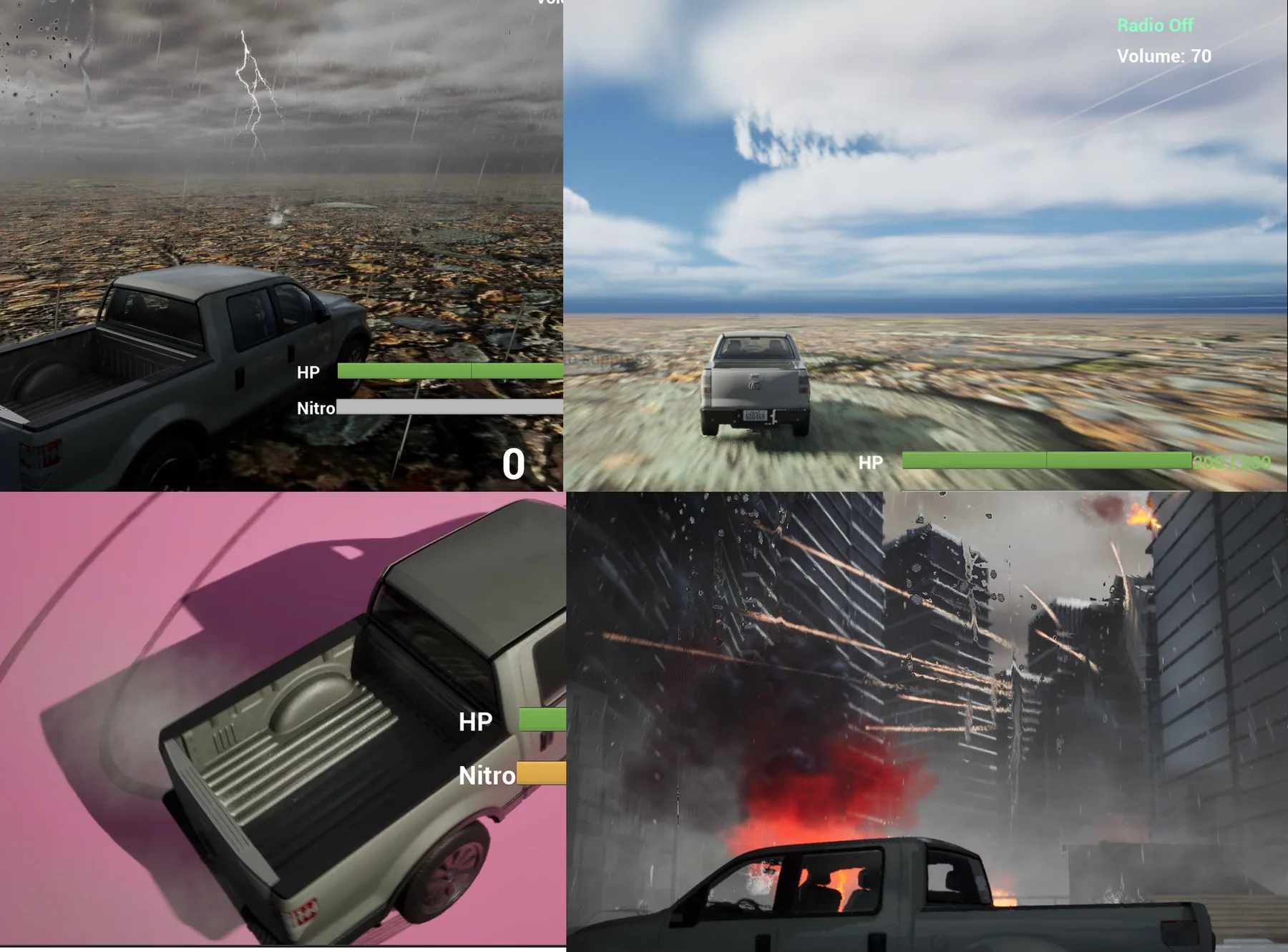
System architecture
I divided the work into state orchestration, reusable simulation components, effect authoring, and gameplay integration so each layer could evolve without owning the others’ details.
- Weather requests flow through BP_WeatherManager into data-driven presets, which blend global sky, exposure, cloud, post-process, and vehicle-fog parameters over a configurable duration.
- A C++ base particle component owns emission, lifetime simulation, and instanced rendering; Data Assets configure it, while specialized components supply fog, smoke, and spark behavior.
- Blueprint-facing APIs connect those systems to weather events, wheel state, vehicle speed, and collision impulses without moving simulation logic back into gameplay Blueprints.
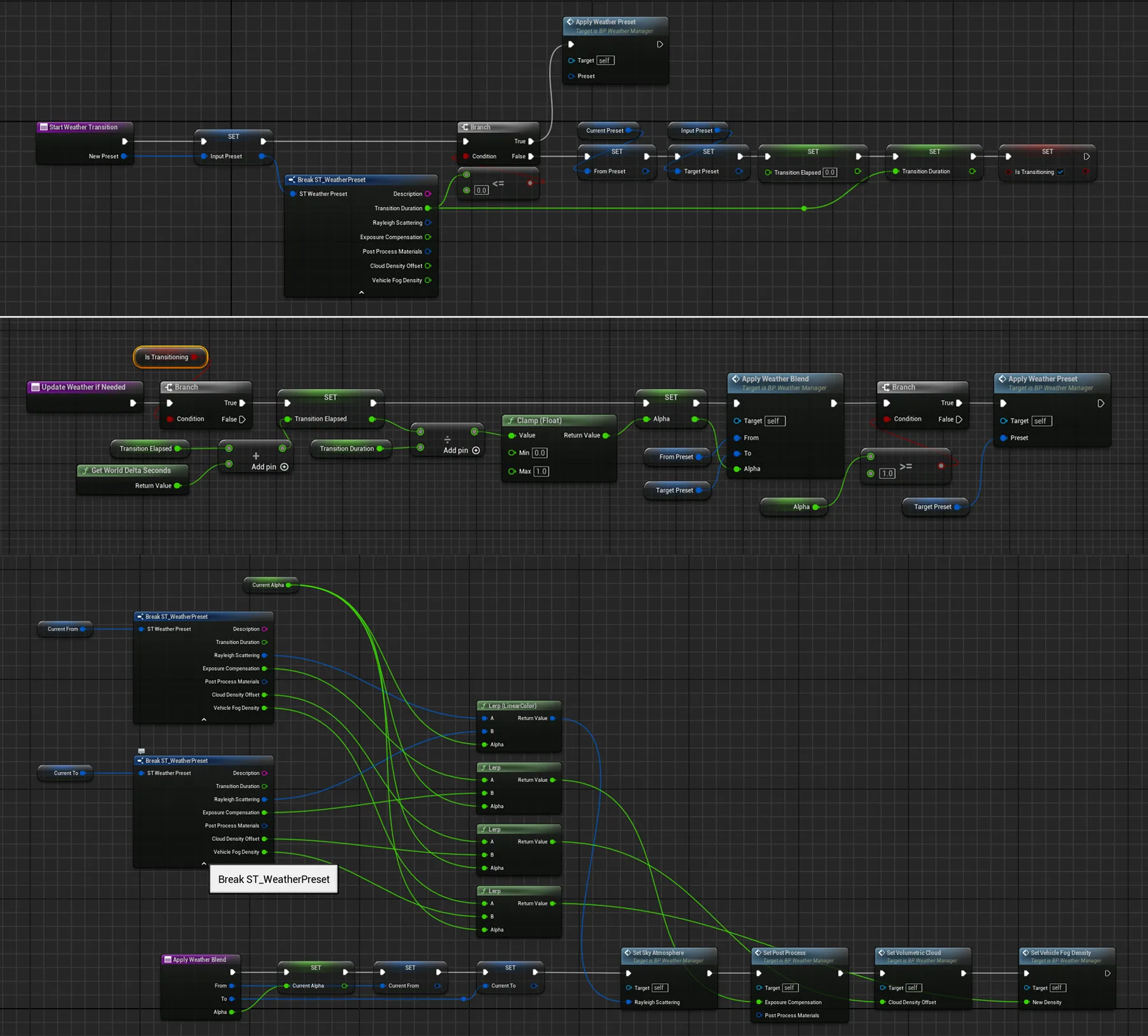
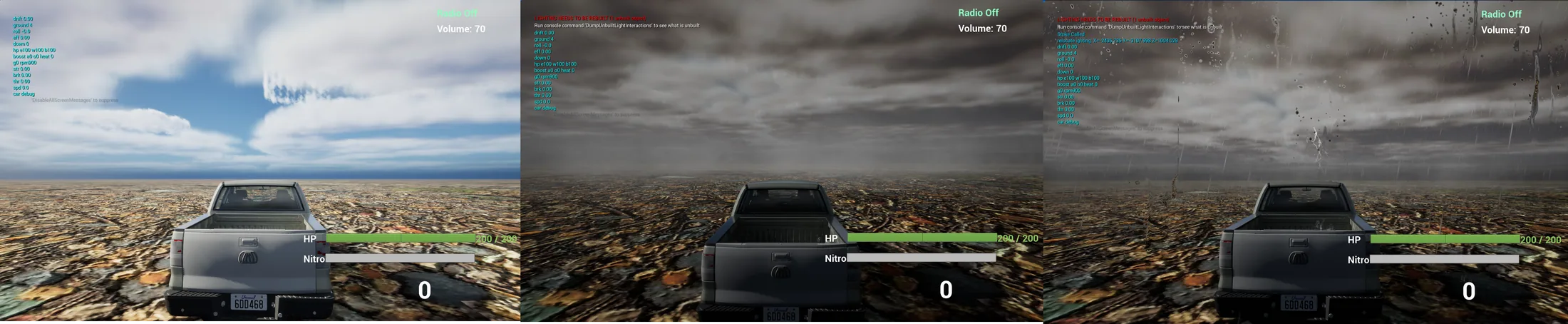
Dynamic weather
The weather layer presents one event-oriented interface to level logic while coordinating several independent rendering systems behind it.
- Defined sunny, overcast, and rainy presets with transition duration, Rayleigh scattering, exposure compensation, post-process materials, cloud-density offset, and vehicle-fog density.
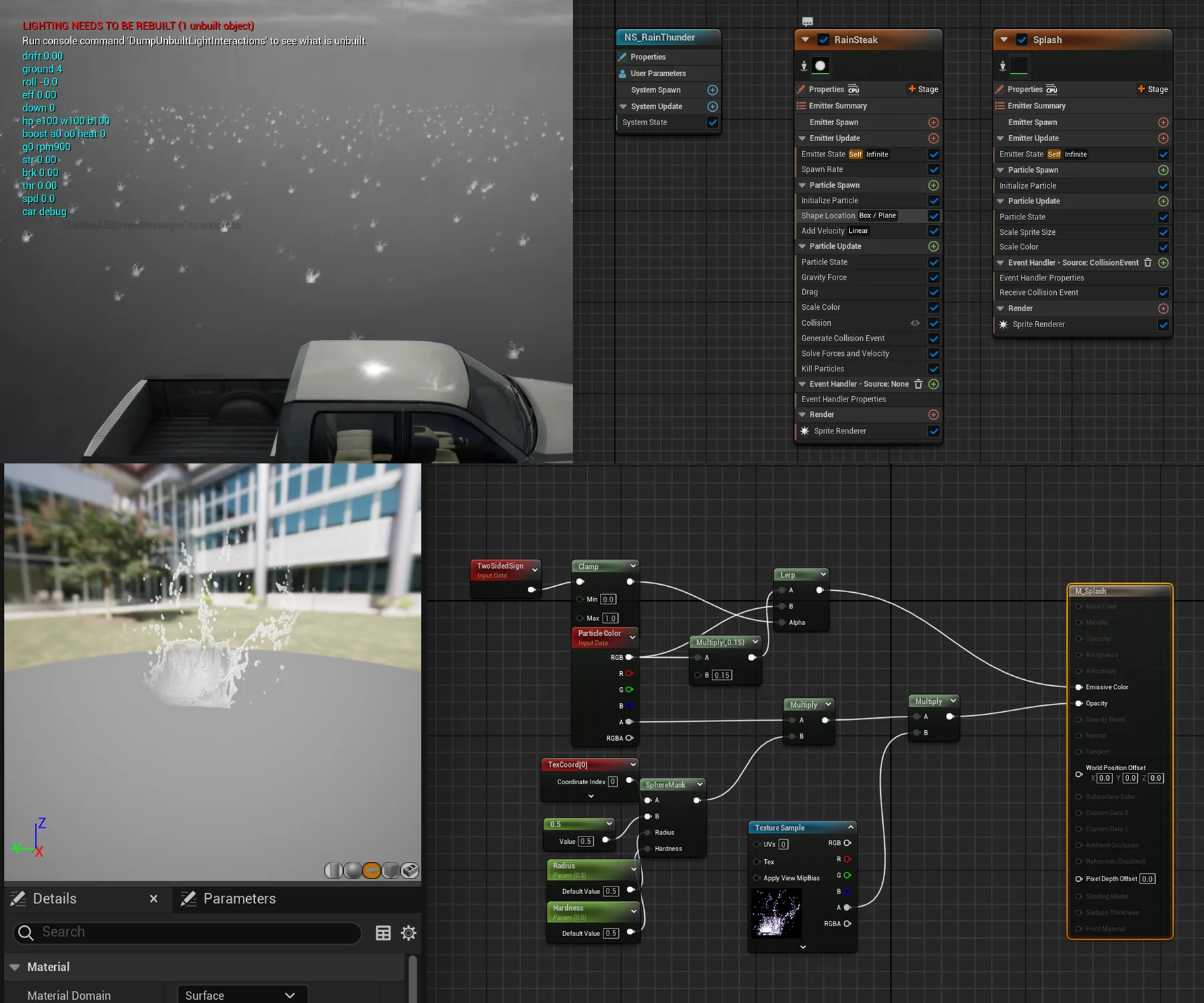
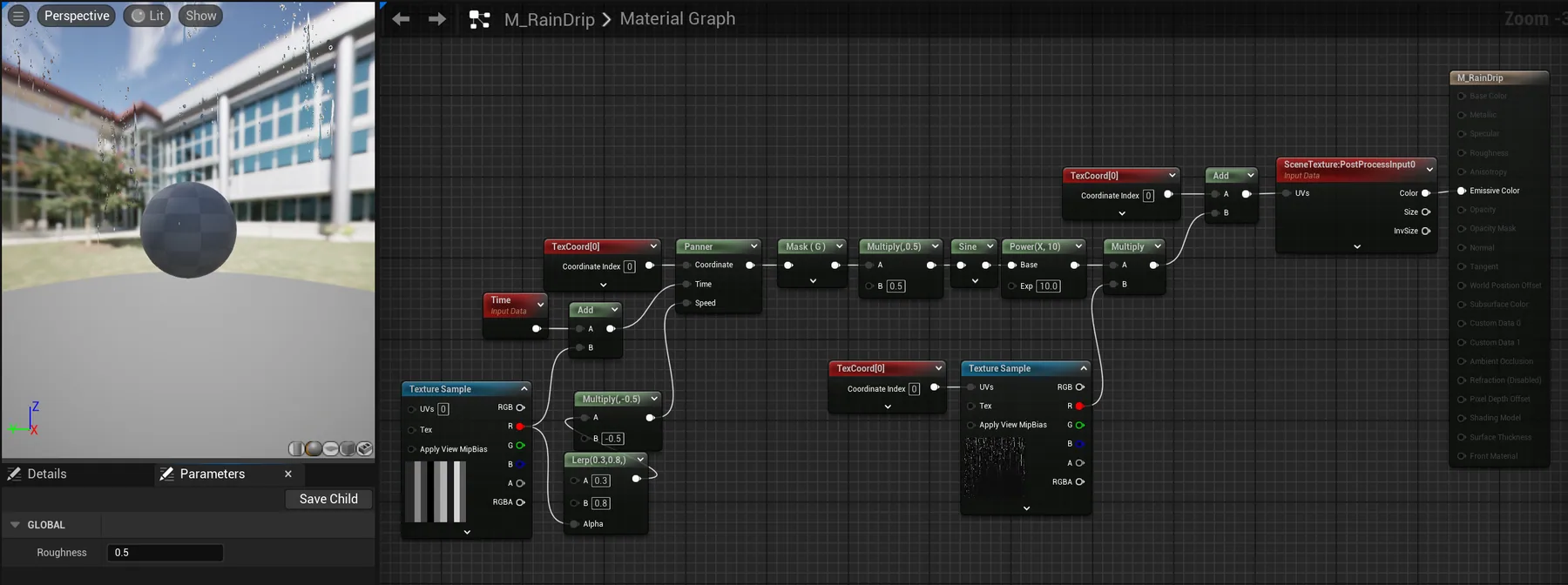
- Combined Niagara rain streaks and collision-driven ground splashes with a lightning material, temporary exposure response, and a screen-space rain-drip post process.
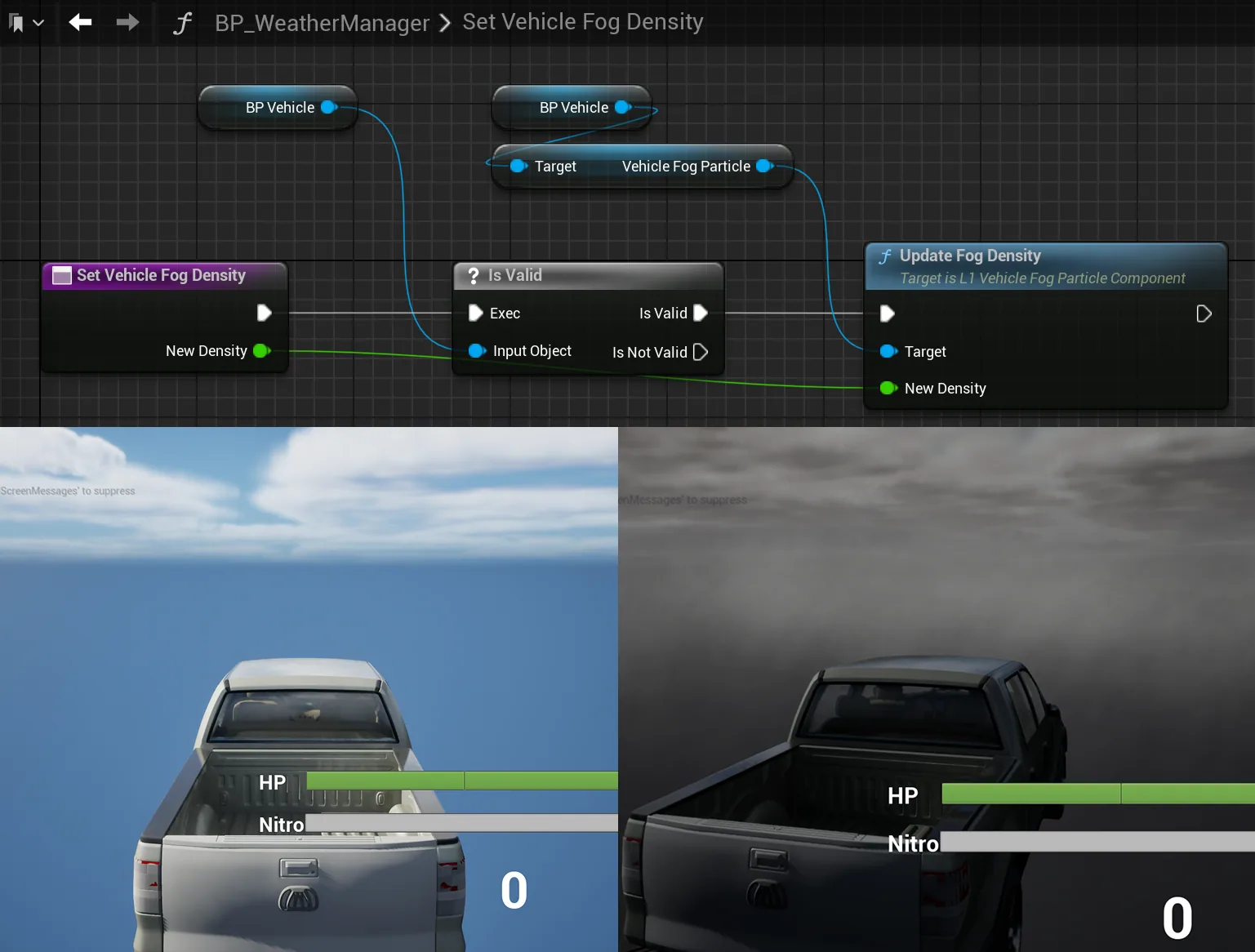
- Kept rain simulation local to the player and blended the custom vehicle-fog density through the same weather transition, preserving atmosphere without simulating rain across the full level.
Reusable C++ particle framework
The framework handles a deliberately small set of particle features in native code and exposes focused controls to Blueprint rather than recreating a general-purpose VFX editor.
- UL1_ParticleComponent supports continuous and burst emission, accumulated spawn rates, particle limits, randomized lifetimes and scales, world- or local-space simulation, and lifecycle cleanup.
- Particles share a UInstancedStaticMeshComponent renderer; per-instance custom data carries opacity while age-based fade-in and fade-out are applied during instance rebuilding.
- Vehicle fog scales spawn rate, particle cap, and material opacity with density, then fades particles by distance so dense fog does not cover the immediate driving area.
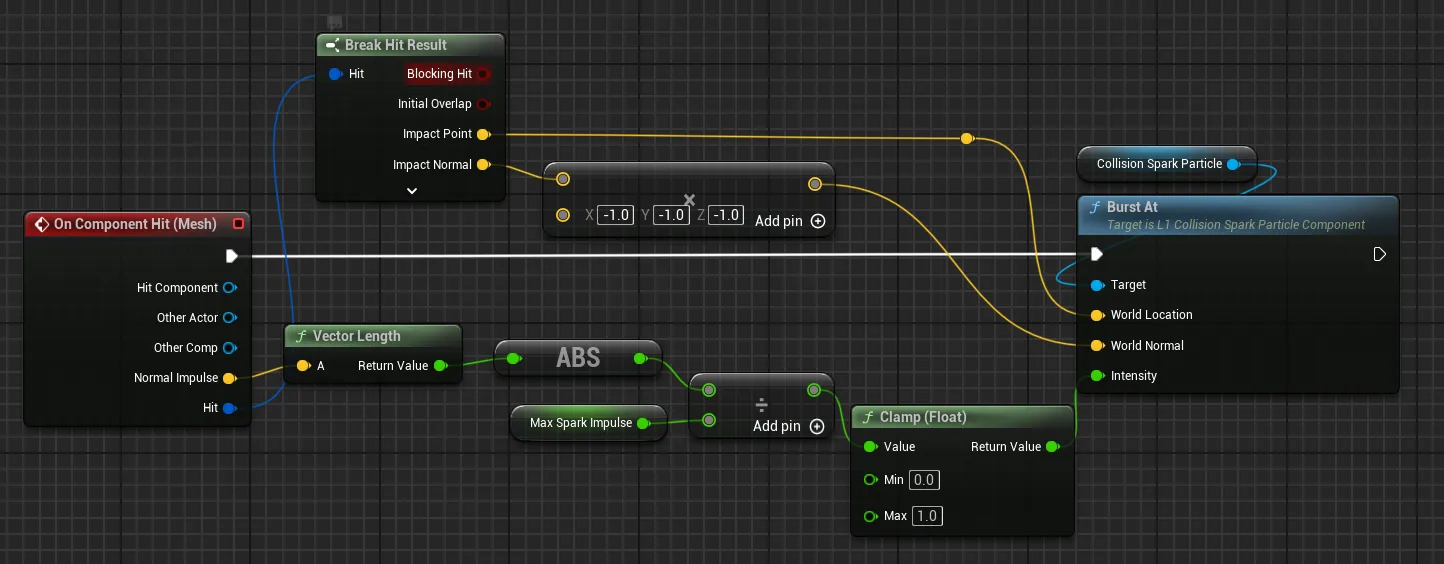
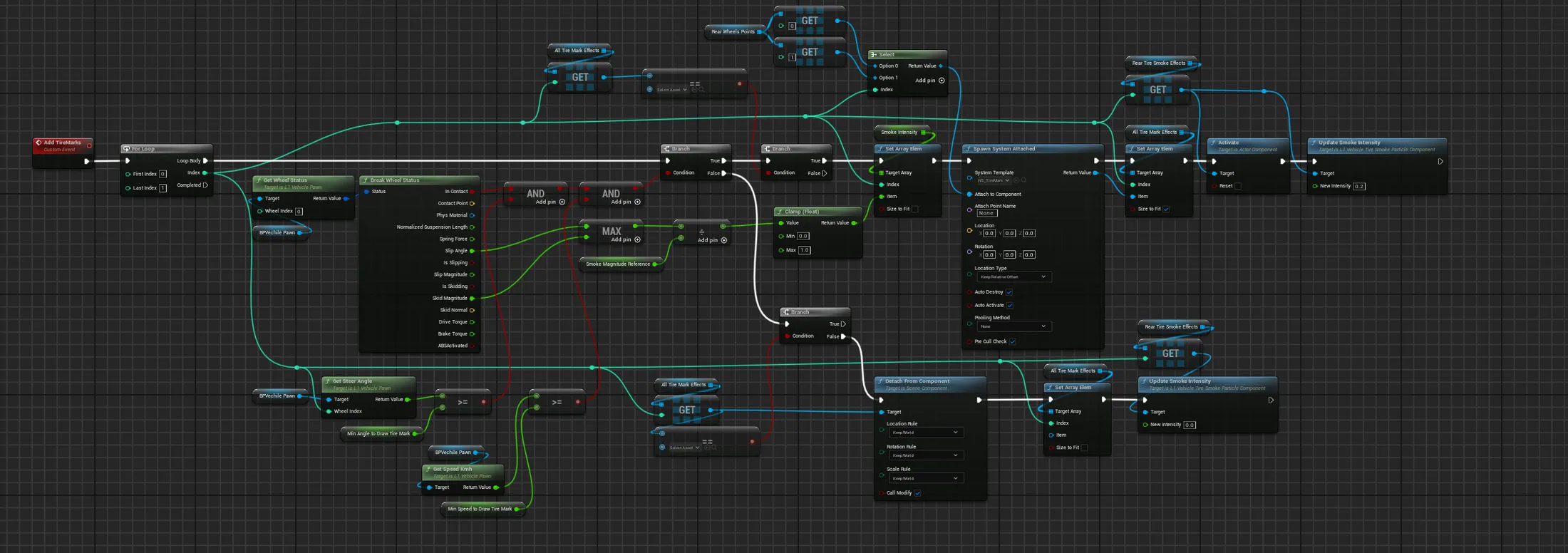
- Tire smoke inherits vehicle velocity and applies damping; collision sparks derive burst count and opacity from impact intensity, then use the hit normal, spread, gravity, and damping to shape motion.
Niagara and gameplay feedback
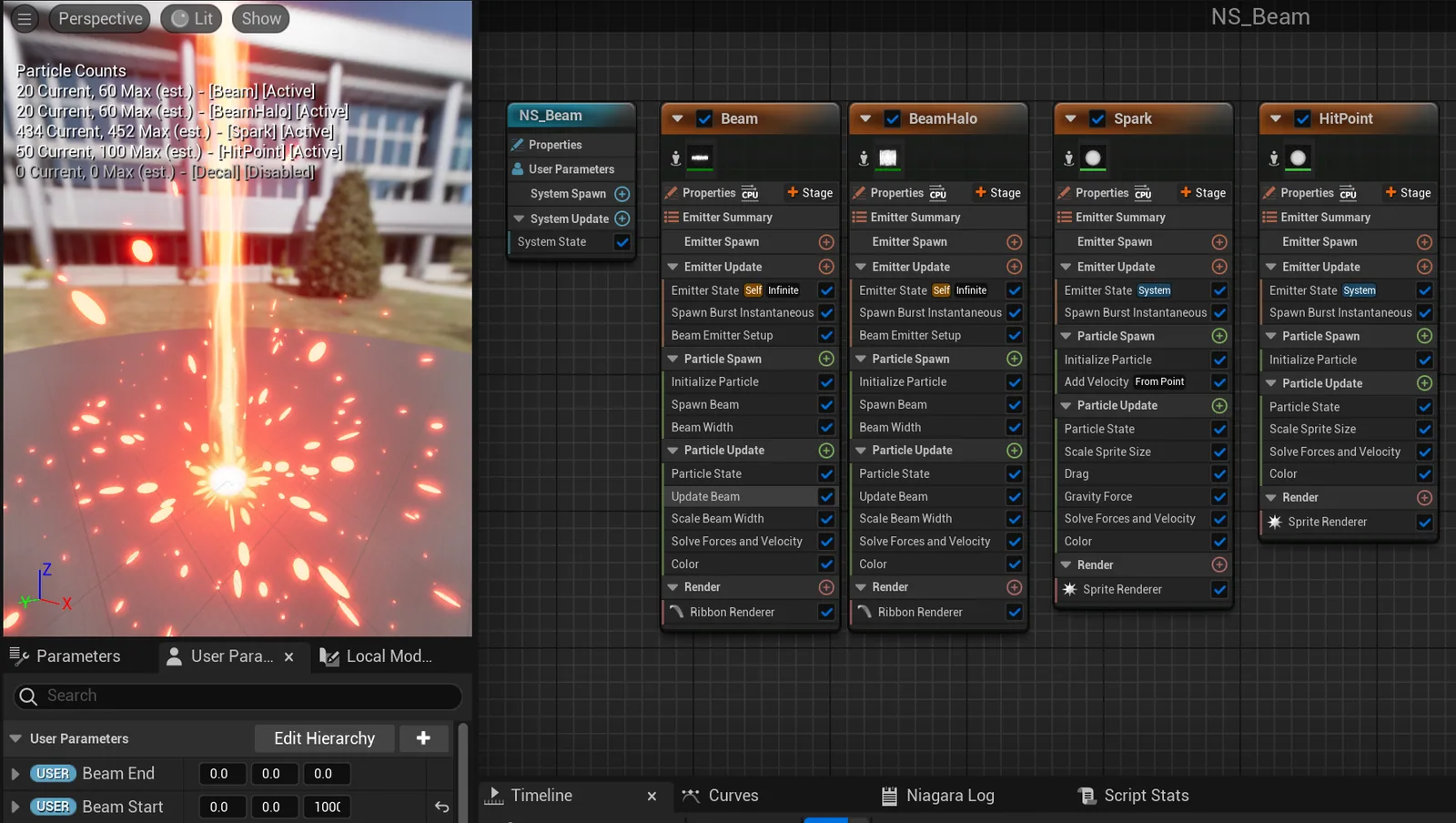
- Built a parameterized beam from separate core, halo, spark, and hit-point emitters, with a panning emissive material and public start/end positions.
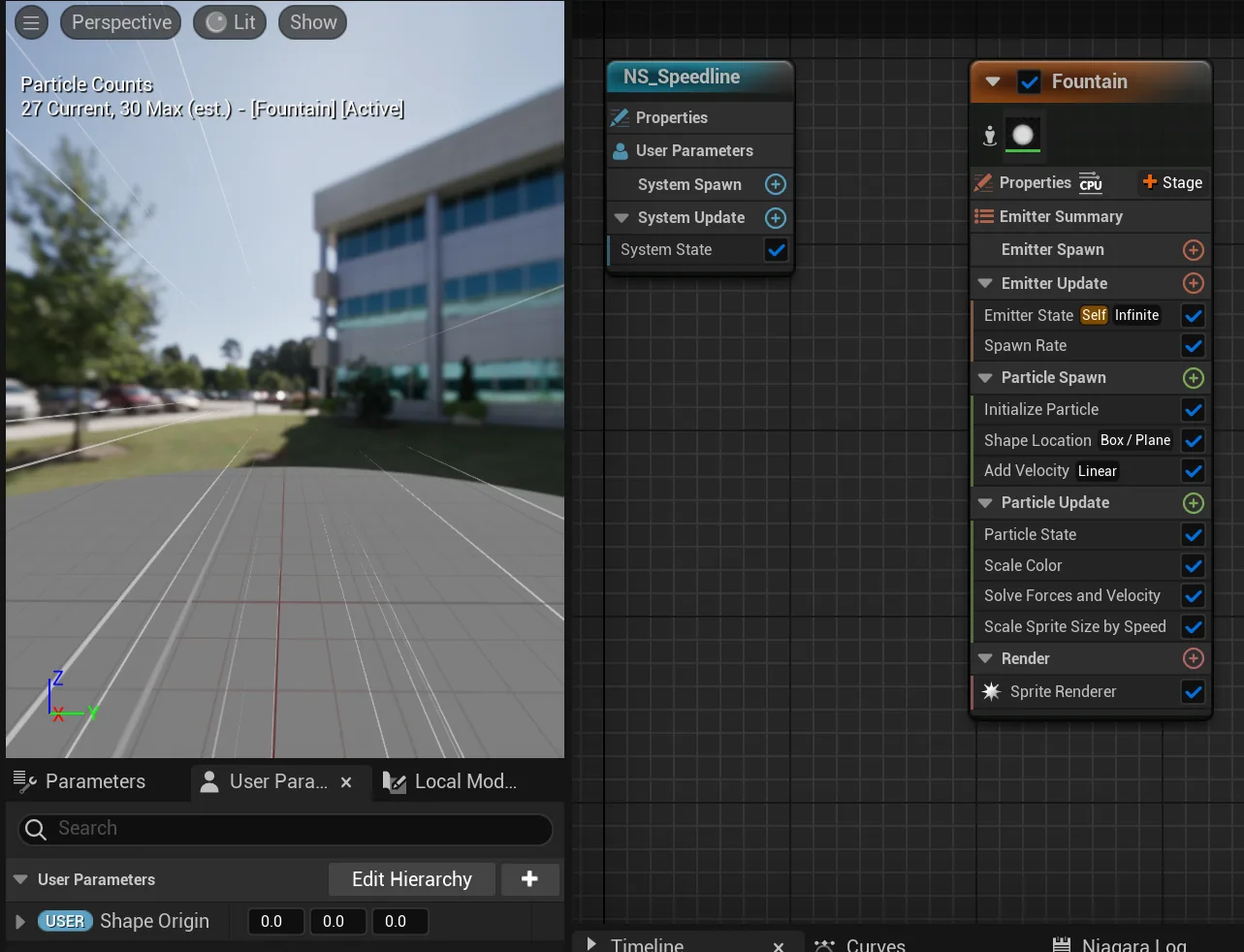
- Attached speed-line emitters to the vehicle camera and toggled them at a speed threshold to reinforce acceleration without changing the vehicle simulation.
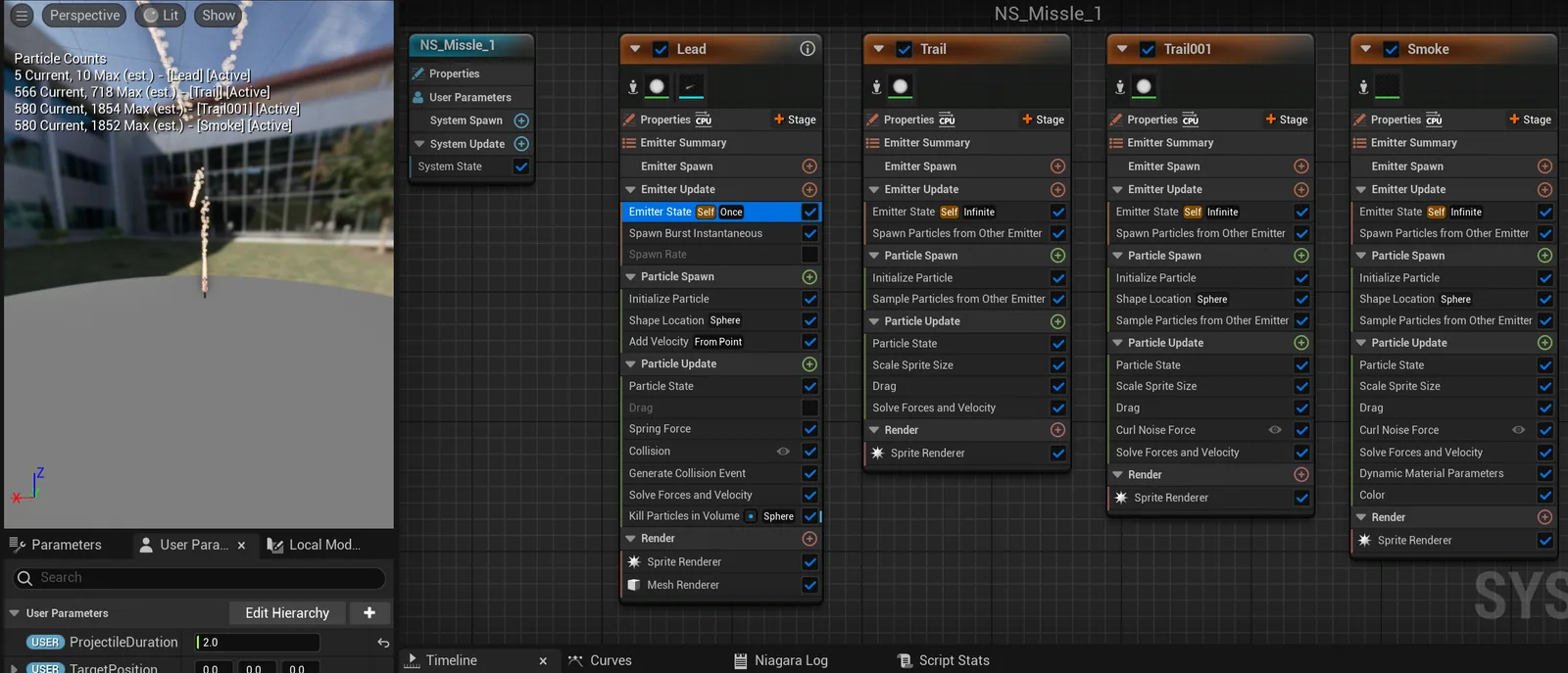
- Created a target-driven missile effect with a lead mesh, layered trails, and smoke, plus Ribbon-based tire marks placed at the rear-wheel contact points.
Engineering decisions
- Limited rain generation to the area around the player and used instanced meshes for the native particle effects, keeping the implementation mindful of runtime cost without claiming unmeasured gains.
- Used presets and narrow Blueprint APIs so artists and gameplay programmers could tune density and intensity without depending on the simulation internals.
- Identified distance culling or LOD for larger particle counts and reduced coupling around shared SFX logic as the next iteration rather than hiding those limits.